Medlock Valley: restoring habitats along the river
The Medlock Valley runs through the heart of several Greater Manchester communities, linking landscapes shaped by decades of industry.
City of Trees worked in partnership with Groundwork Greater Manchester, The Conservation Volunteers (TCV), the Canal & River Trust and Mersey Rivers Trust to restore habitats along the River Medlock – as well as collaborating with local authorities including Manchester City Council, Oldham Council and Tameside Council.
As part of the Species Survival Fund (SSF), the partnership set out to manage and improve 30 hectares of land across seven key sites. The aim was to reverse the decline of important species such as bats, water voles, willow tits, great crested newts and waxcap fungi.
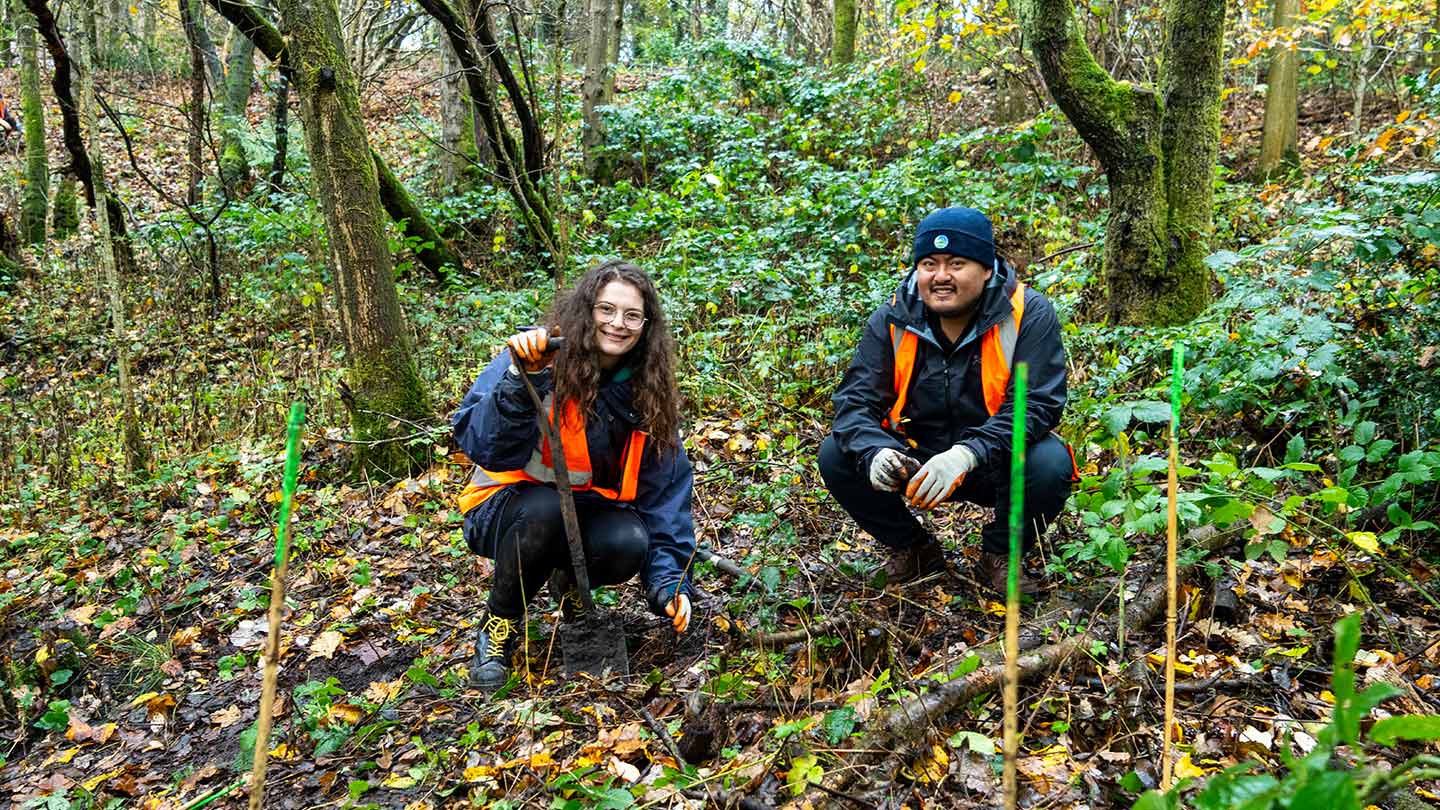
New native tree were planted in existing woodland to give it a more diverse, resilient structure. Credit: City of Trees.
Strengthening woodland habitats
Many of the woodlands in the Medlock Valley were planted in the 1970s and dominated by fast-growing pioneer species such as silver birch, alder, ash, willow and poplar.
But ash is now badly affected by ash dieback, and the other species have relatively short lifespans. As the trees age and begin to die, gaps can appear in the woodland canopy, which is made worse due to little natural regrowth.
City of Trees focused on actively managing and diversifying woodlands across five sites, including Clayton Vale in Manchester and Lees Brook in Oldham. This meant thinning some trees and removing dominant or non-native species to create space and let more light in. After this, new native trees were planted to help create a stronger, longer-lasting woodland structure.
In total, the team planted 1,945 native trees – more than 24 species. Across the wider project, the partnership planted 5,200 trees.
Alongside tree planting, the work included:
- planting 722 woodland wildflowers
- sowing over 300 grams of wildflower seed
- managing almost 2.2 hectares of woodland
- removing more than 90 bags of litter
- carrying out specialist tree veteranisation work to create habitats that would normally take decades to form.
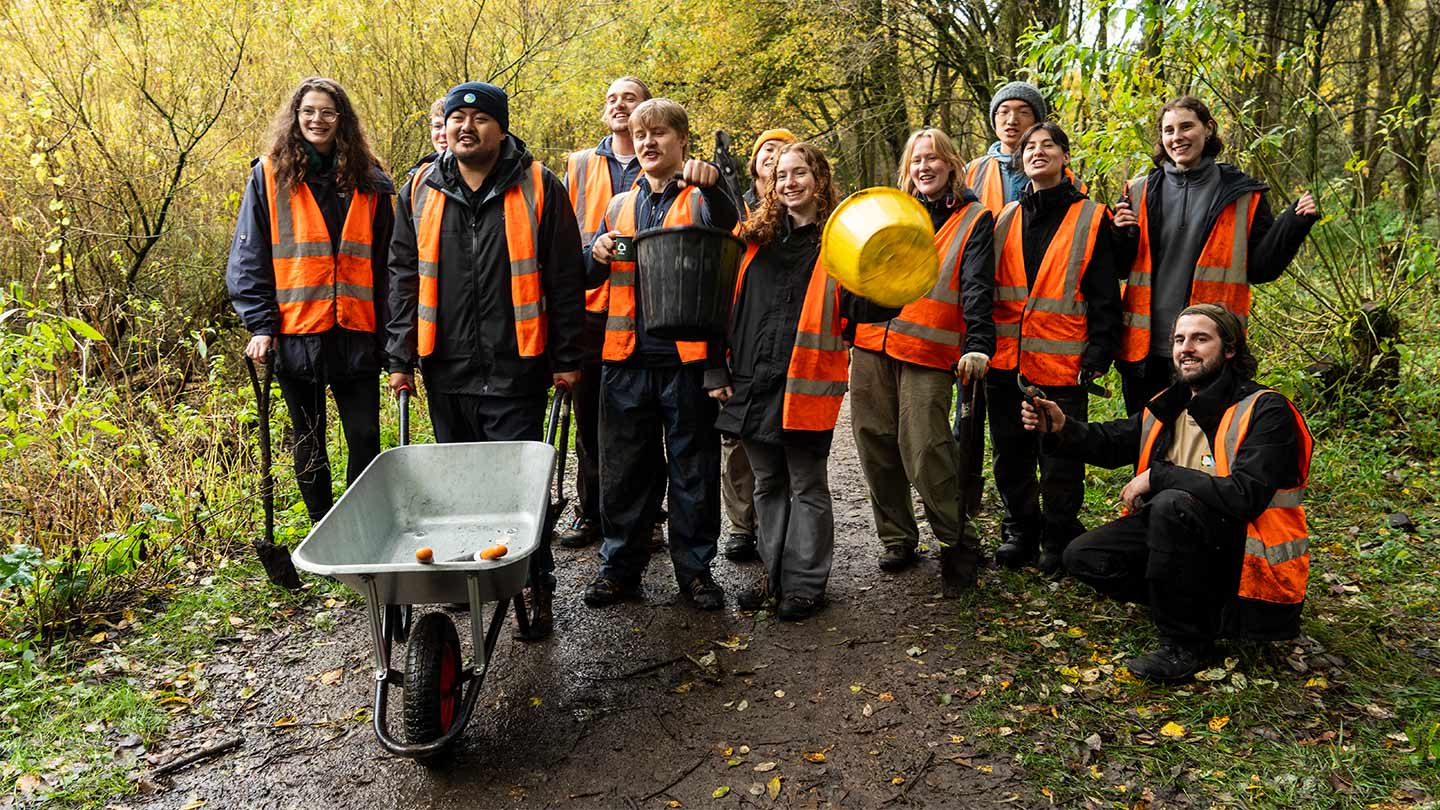
Volunteers from all parts of the community contributed to the project. Credit: City of Trees.
Powered by local people
It was really important to create a sense of ownership and get the community involved throughout the project. In total, 387 volunteers gave almost 2,000 hours of their time. Regular volunteering sessions gave people the chance to learn new green skills, take part in conservation activities and spend time outdoors.
The project encouraged participation from all parts of the community – volunteer groups included local residents, young people and individuals from underrepresented backgrounds. One of the partner organisations, Back on Track, supports people who have experienced homelessness and mental health challenges. Taking part in this project helped them to connect with their community.
“It’s been great for getting members out into their community and encouraging them to engage with their local spaces. Members developed their wellbeing, confidence, communication and motivation for progression.” - Back on Track volunteer.
A stronger future for wildlife
By diversifying tree species and actively managing the woodland, the project is helping to create a more resilient landscape along the Medlock Valley. The newly planted native trees will grow to create a more diverse and resilient canopy. Wildflowers will spread and establish, bringing colour and supporting pollinators. And areas that were coppiced will regenerate, creating natural shifts in light and structure that benefit a wide range of species.
Together, these changes will help create healthier, more resilient woodlands – supporting wildlife today while restoring nature for future generations.
This work is supported by the Species Survival Fund. The fund was developed by Defra and its arm’s-length bodies and delivered by The National Lottery Heritage Fund in partnership with Natural England and the Environment Agency.
Be part of the Northern Forest
Want to plant trees? Whether you’re creating new woodland or extending an existing site, you can reap a whole host of extra benefits.
- Boost biodiversity.
- Provide shelter.
- Protect your soil.
- Fight flooding.
Your new trees could be part of the Northern Forest and make a difference for people, wildlife and the environment in the North of England.
Credit: Phil Formby / WTML
Get started today
Speak to an expert adviser from any Northern Forest partner for no obligation advice and support.