Cottingham: a woodland for water and wildlife
In 2022, Yorkshire Water approached the Woodland Trust to explore the potential for creating woodland on land surrounding its water pumping station near Cottingham.
The company owns the site to protect and maintain underground infrastructure that supplies drinking water to the city of Hull – but they wanted to know if they could use it to deliver wider environmental benefits. To create more space for nature, help slow the flow of flood water across the site and capture carbon – all while protecting its essential infrastructure.
Establishing new woodland is particularly important here, as Hull and East Yorkshire have the lowest tree and woodland cover in England.
Partnership planning
The woodland needed to work around existing features on the site, such as overhead cables, underground infrastructure and public footpaths. This mapping, along with soil surveys, identified the best planting locations for the different tree species.
Throughout the process, the Woodland Trust worked closely with Yorkshire Water, as well as a range of organisations including Natural England, the Forestry Commission, the Environment Agency, East Riding of Yorkshire Council, county archaeologists and the local parish council.
Planting in complex environments
The site plays an important role in supplying drinking water, so it was essential that planting methods did not risk affecting underground water quality. This led to the use of hinge mounding – a technique in which a machine creates raised soil mounds into which trees are planted, providing a weed-free establishment without the need for mulch or chemical weed control.
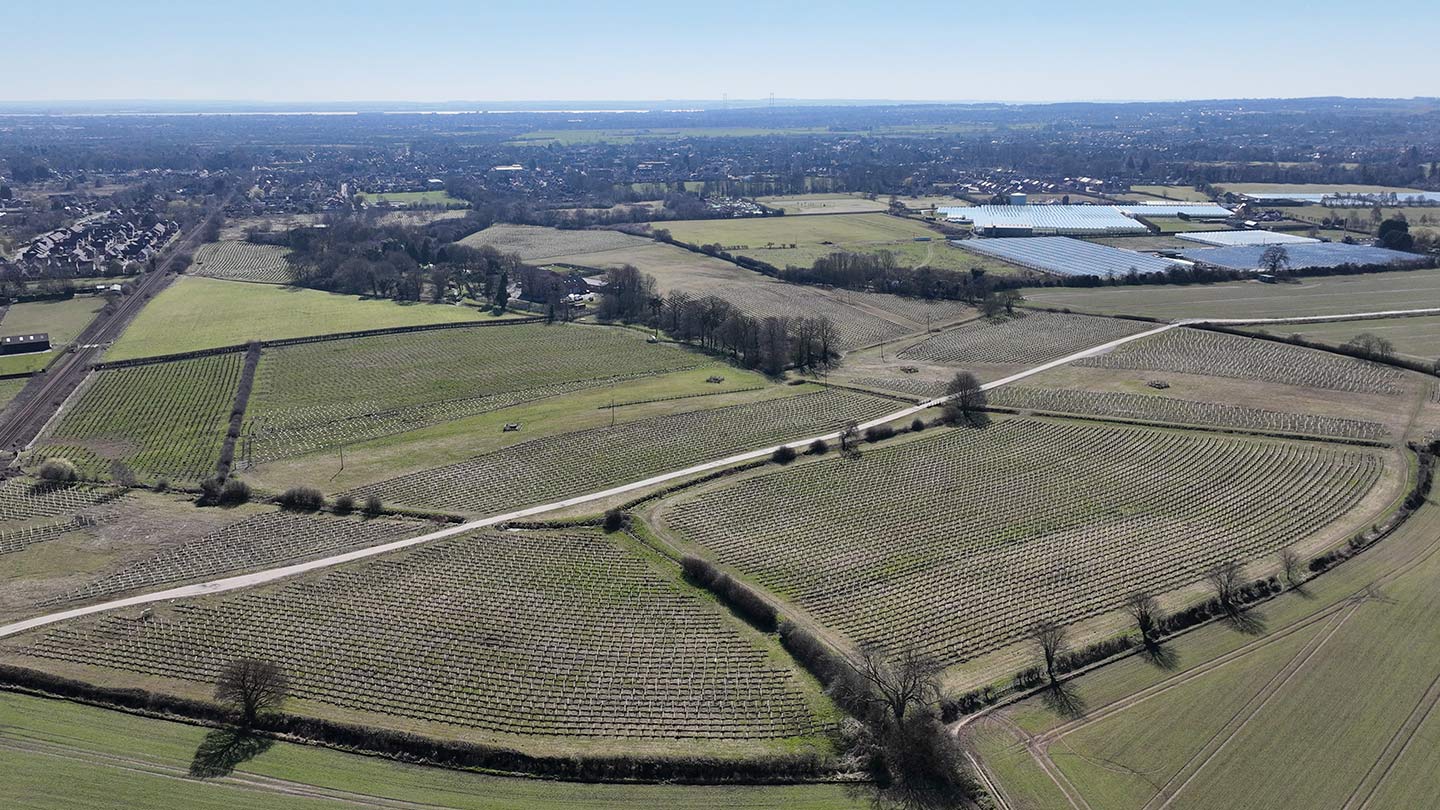
Over 38,000 native trees and shrubs were planted, creating an extensive new woodland. Credit: Team UAV.
Creating a resilient woodland
Large woodland creation projects often take several years to move from planning to delivery. At Cottingham, tree planting finally began in early 2025 and the new native woodland now covers 25.35ha (more than 60 acres) with 38,325 native trees and shrubs.
A diverse mix of 25 native tree and shrub species was selected to create a rich habitat for wildlife as well as making the woodland more resilient to challenges such as extreme weather, pests and diseases in the years ahead.
Most of the young trees are protected from deer, rabbits and voles using 1.2-metre tree guards. However, part of the site is also being used to trial alternative approaches. In one area, trees are being planted with sheep’s wool mulch mats to see whether they help protect trees from drought and suppress competing vegetation such as vigorous grasses.
The woodland is in an area likely to experience flooding in the future. As the trees grow, they will help slow the movement of surface water across the land and help reduce the severity of flood events for communities downstream.
With planting so many young trees, an important part of the funding is to be used to remove and recycle all plastic tree guards once the woodland is fully established.
A woodland for the future
Funded through the Grow Back Greener grant and delivered by the Woodland Trust in partnership with Yorkshire Water, the project will help restore nature, strengthen flood resilience and increase tree cover in one of England’s least wooded regions. As the woodland establishes and grows, it will provide lasting benefits for wildlife, the landscape and the communities connected to it.
Be part of the Northern Forest
Want to plant trees? Whether you’re creating new woodland or extending an existing site, you can reap a whole host of extra benefits.
- Boost biodiversity.
- Provide shelter.
- Protect your soil.
- Fight flooding
Your new trees could be part of the Northern Forest and make a difference for people, wildlife and the environment in the North of England.
Credit: Phil Formby / WTML
Get started today
Speak to an expert adviser from any Northern Forest partner for no obligation advice and support.